For DevOps and platform engineering teams that want API keys and credentials out of code and CI pipelines, HashiCorp Vault, Infisical and Doppler cover the widest range of secret types, rotation options and CI/CD integration in their documentation. The shortlist also includes Akeyless, OpenBao, AWS Secrets Manager, Azure Key Vault and Google Secret Manager. Each entry notes what the vendor documents and where its scope ends.
The shortlist
Side-by-side comparison
| Tool | Who it is for | Platforms | Pricing |
|---|---|---|---|
 HashiCorp VaultHashiCorp | Teams running secrets across on-premises, cloud and hybrid setups | Binary download, Community or Enterprise packages, build from source; HCP Vault Dedicated as a managed option | Pricing on vaultproject.io |
 InfisicalInfisical Inc. | Teams that want secrets, certificates and privileged access in one open-source platform | Not stated on official pages | Pricing on infisical.com |
 DopplerDoppler Inc. | Teams that want to sync secrets into CI/CD and deploys | Cloud and on-prem environments | Pricing on doppler.com |
 AkeylessAkeyless Security | Enterprises that want one platform across multiple clouds and existing vaults | Hybrid-SaaS, covering cloud workloads and legacy environments | Pricing on akeyless.io |
 OpenBaoOpenBao / Linux Foundation | Teams that want an open-governance, Vault-style system they run themselves | RPM and DEB packages from a hosted repository | Pricing on openbao.org |
 AWS Secrets ManagerAmazon Web Services | Teams whose workloads run on AWS | AWS | Pricing on aws.amazon.com |
 Azure Key VaultMicrosoft | Owners of Azure cloud apps that use cryptographic keys and secrets | Azure cloud service | Pricing on azure.microsoft.com |
 Google Secret ManagerGoogle Cloud | Teams on Google Cloud storing runtime configuration | Google Cloud | Pricing on cloud.google.com |
Quick verdict by need
- HashiCorp Vault if you need teams running secrets across on-premises, cloud and hybrid setups.
- Infisical if you need teams that want secrets, certificates and privileged access in one open-source platform.
- Doppler if you need teams that want to sync secrets into CI/CD and deploys.
- Akeyless if you need enterprises that want one platform across multiple clouds and existing vaults.
- OpenBao if you need teams that want an open-governance, Vault-style system they run themselves.
- AWS Secrets Manager if you need teams whose workloads run on AWS.
Tool details
#1 · HashiCorp
HashiCorp Vault
Teams running secrets across on-premises, cloud and hybrid setups
vaultproject.ioHashiCorp Vault stores, controls access to and encrypts secrets such as tokens, passwords, certificates and encryption keys. It can be used through a UI, CLI or HTTP API.
Documented strengths
- Key/Value, database, Transit and Transform secrets engines
- Dynamic database credentials from pre-configured roles
- Authentication via tokens, LDAP, Azure, AWS and other providers
- Audit of all activity, including failed authentication
- Modular, plugin-based design
Documented limits
The Transform secrets engine and other Enterprise features require a valid license. Teams should check the documentation for how integrated storage fits their deployment.
- Who it is for
- Teams running secrets across on-premises, cloud and hybrid setups
- Platforms
- Binary download, Community or Enterprise packages, build from source; HCP Vault Dedicated as a managed option
- Pricing
- See the vendor's own pricing page for current plans and costs. vaultproject.io
- Facts checked
- 21 November 2026
Why it is placed here: It leads this list for fit because it documents the widest mix of secret types, dynamic database credentials, encryption as a service and authentication methods across on-premises, cloud and hybrid environments.
#2 · Infisical Inc.
Infisical
Teams that want secrets, certificates and privileged access in one open-source platform
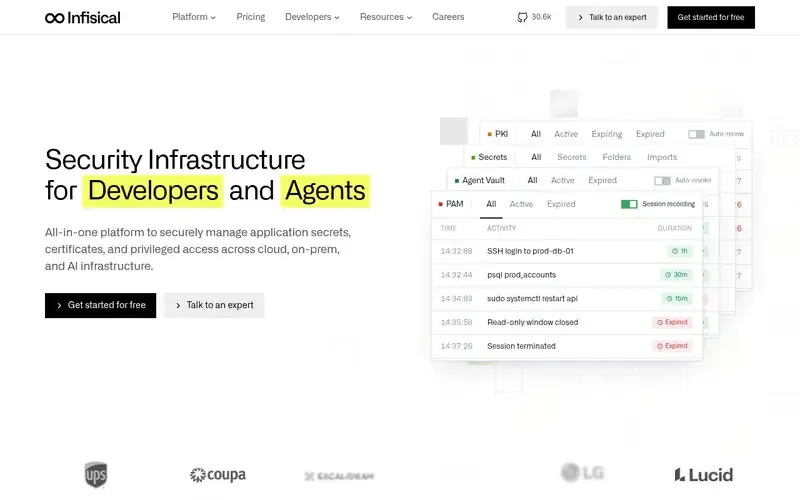
Infisical is an open-source identity security platform for managing secrets, certificates and privileged access for developers, machines and AI agents.
Documented strengths
- Access scoped by environment, path and identity with RBAC
- Scheduled rotation and short-lived dynamic secrets
- Approval workflows for sensitive changes and access requests
- Private CAs and certificate lifecycle automation
- Compliance listed: SOC 2, HIPAA and FIPS 140-3
Documented limits
The facts we used do not describe specific CI/CD integrations, so check the vendor documentation for your pipeline. Privileged access database support and rotation vary by database.
- Who it is for
- Teams that want secrets, certificates and privileged access in one open-source platform
- Platforms
- Not stated on official pages
- Pricing
- See the vendor's own pricing page for current plans and costs. infisical.com
- Facts checked
- 21 November 2026
Why it is placed here: It sits second because it documents scheduled rotation, short-lived dynamic secrets and approval workflows alongside certificate and privileged access features in one platform.
#3 · Doppler Inc.
Doppler
Teams that want to sync secrets into CI/CD and deploys
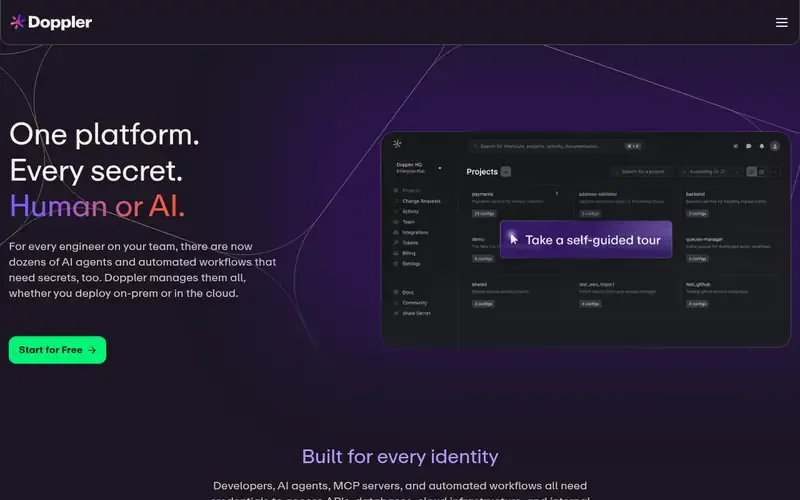
Doppler is a secrets management platform that helps teams secure, sync and automate secrets across cloud and on-prem environments.
Documented strengths
- Native integrations with cloud platforms, Kubernetes, CI/CD, webhooks and SDKs
- Dynamic Secrets issued on every deploy and revoked automatically
- Version history with revert to a prior secret version
- Encrypted fallback files for offline development
- SAML, user groups and static IP allow lists
Documented limits
Documented as a managed platform; teams that need to self-host should check the vendor documentation. Certificate management is not described in the facts we used.
- Who it is for
- Teams that want to sync secrets into CI/CD and deploys
- Platforms
- Cloud and on-prem environments
- Pricing
- See the vendor's own pricing page for current plans and costs. doppler.com
- Facts checked
- 21 November 2026
Why it is placed here: It sits third because it documents native CI/CD, Kubernetes and cloud integrations plus Dynamic Secrets that issue a fresh credential on every deploy, which maps directly to pipeline use.
#4 · Akeyless Security
Akeyless
Enterprises that want one platform across multiple clouds and existing vaults
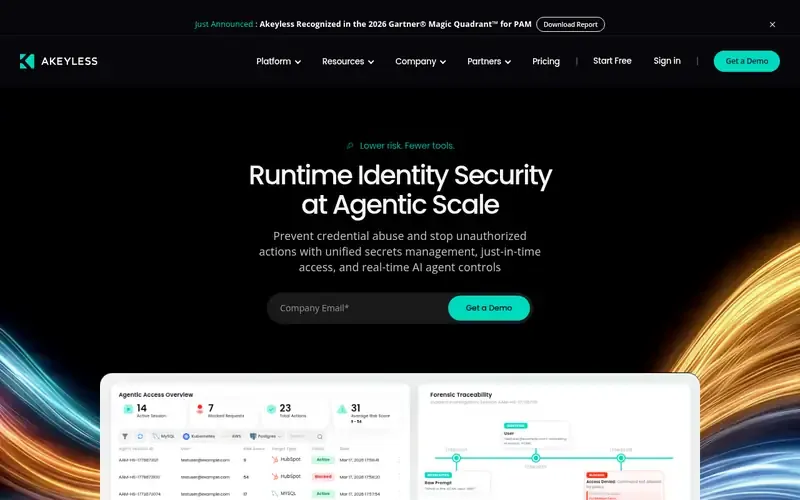
Akeyless is a cloud-native SaaS platform for secrets management and identity security covering machines, AI agents and humans, built on zero-knowledge cryptography.
Documented strengths
- Automated secret rotation and just-in-time temporary secrets for CI/CD
- Single policy engine for secrets, keys, certificates and machine identities
- Certificate lifecycle management and PKI
- Multi-cloud KMS
- Multi-Vault Governance for connecting external vaults
Documented limits
It is offered as a Hybrid-SaaS solution, so teams that must run everything themselves should check the vendor documentation.
- Who it is for
- Enterprises that want one platform across multiple clouds and existing vaults
- Platforms
- Hybrid-SaaS, covering cloud workloads and legacy environments
- Pricing
- See the vendor's own pricing page for current plans and costs. akeyless.io
- Facts checked
- 21 November 2026
Why it is placed here: It follows because it documents automated rotation and just-in-time secrets for CI/CD pipelines, plus the option to connect existing vaults, but it is a SaaS-first model.
#5 · OpenBao / Linux Foundation
OpenBao
Teams that want an open-governance, Vault-style system they run themselves
OpenBao is an open source, community-driven fork of Vault under the Linux Foundation, offering identity-based secrets and encryption management.
Documented strengths
- Dynamic secrets on demand, for example for Kubernetes or SQL databases
- Leases with automatic revocation at lease end
- Path-based policies attached to tokens
- Clients validated against sources such as GitHub, LDAP and AppRole
- Audit trail of client actions
Documented limits
The facts we used describe a self-run system with RPM and DEB packages; managed hosting and CI/CD plugins are not described, so check the vendor documentation.
- Who it is for
- Teams that want an open-governance, Vault-style system they run themselves
- Platforms
- RPM and DEB packages from a hosted repository
- Pricing
- See the vendor's own pricing page for current plans and costs. openbao.org
- Facts checked
- 21 November 2026
Why it is placed here: It sits mid-list because it documents dynamic secrets, leases with automatic revocation and a UI, CLI and HTTP API, for teams who want an open governance model.
#6 · Amazon Web Services
AWS Secrets Manager
Teams whose workloads run on AWS
AWS Secrets Manager is an AWS service for managing, rotating and retrieving database credentials, API keys and other secrets through their lifecycle.
Documented strengths
- Rotation on demand or on a schedule without redeploying applications
- IAM permissions policies and fine-grained access policies
- Encrypted and centrally audited secrets
- Integration with AWS logging, monitoring and notification services
- Replication for disaster recovery
Documented limits
Documented within AWS; teams that run across several clouds should check the vendor documentation for coverage outside AWS. Specific CI/CD integrations are not listed in the facts we used.
- Who it is for
- Teams whose workloads run on AWS
- Platforms
- AWS
- Pricing
- See the vendor's own pricing page for current plans and costs. aws.amazon.com
- Facts checked
- 21 November 2026
Why it is placed here: It sits here because rotation on demand or on a schedule without redeploying applications is documented, which suits teams already on AWS.
#7 · Microsoft
Azure Key Vault
Owners of Azure cloud apps that use cryptographic keys and secrets
Azure Key Vault is a Microsoft cloud service for securely storing and accessing passwords, cryptographic keys, certificates and other secrets used by cloud apps.
Documented strengths
- Stores API keys, passwords, certificates and cryptographic keys
- Keys can be stored in hardware security modules
- No need to provision, patch or maintain HSMs
- Applications never have direct access to keys
- Central management of keys, secrets and policies
Documented limits
Documented for cloud apps and services; teams that need automated rotation or pipeline integration should check the vendor documentation.
- Who it is for
- Owners of Azure cloud apps that use cryptographic keys and secrets
- Platforms
- Azure cloud service
- Pricing
- See the vendor's own pricing page for current plans and costs. azure.microsoft.com
- Facts checked
- 21 November 2026
Why it is placed here: It sits seventh because it is strongest for keys and certificates in Azure apps, and the facts we used do not describe rotation or CI/CD integration.
#8 · Google Cloud
Google Secret Manager
Teams on Google Cloud storing runtime configuration
Secret Manager is Google Cloud's storage system for API keys, passwords, certificates and other sensitive data.
Documented strengths
- Per-secret permissions through Cloud IAM
- Versioned secrets, with requests pinned to the latest version
- Rotation automated with Cloud Functions
- Audit log for every interaction through Cloud Audit Logs
- Integration with Terraform and GitHub Actions
Documented limits
Secret values are limited to 64 KiB. Access defaults to project owners, and other roles must be granted permissions through Cloud IAM.
- Who it is for
- Teams on Google Cloud storing runtime configuration
- Platforms
- Google Cloud
- Pricing
- See the vendor's own pricing page for current plans and costs. cloud.google.com
- Facts checked
- 21 November 2026
Why it is placed here: It sits last because it is a focused storage service for Google Cloud, although it documents Terraform and GitHub Actions integration and Cloud Functions for rotation.
Sources
- HashiCorp Vault: developer.hashicorp.com/vault, developer.hashicorp.com/vault/docs/about-vault/what-is-vault, developer.hashicorp.com/well-architected-framework/secure-systems/infrastructure/zero-trust-security (21 Nov 2026)
- Infisical: infisical.com, infisical.com/about, infisical.com/platform/pam (21 Nov 2026)
- Doppler: doppler.com, doppler.com/about, doppler.com/security (21 Nov 2026)
- Akeyless: akeyless.io, akeyless.io/about, akeyless.io/landing/product-tour (21 Nov 2026)
- OpenBao: openbao.org, openbao.org/docs/what-is-openbao (21 Nov 2026)
- AWS Secrets Manager: aws.amazon.com/secrets-manager, aws.amazon.com/products, aws.amazon.com/solutions/ai (21 Nov 2026)
- Azure Key Vault: azure.microsoft.com/en-us/products/key-vault, azure.microsoft.com/en-us/products, azure.microsoft.com/en-us/products (21 Nov 2026)
- Google Secret Manager: cloud.google.com/security/products/secret-manager (21 Nov 2026)
Related guides
How we compiled this
We compared tools on fit with the use case of keeping secrets out of code and pipelines, the capabilities each vendor documents, and the deployment and platform details on official pages. We gave the most weight to breadth of secret types, rotation and dynamic credentials, and integration with CI/CD and multiple environments. Cloud provider services are included because many teams already run on those platforms, and they are placed according to how much of the use case their documentation covers.
All facts come from official vendor pages, each with a check date. The order reflects editorial fit for this use case, explained in the "why here" line for each tool, and it is not a claim that one tool is better overall. The list is built from documentation rather than product trials, so where a page does not mention a capability we say so and suggest checking the vendor documentation.
Order used: Ordered by breadth of secret types, rotation and CI/CD integration across environments, closest fit first.
Common questions
How do I keep API keys out of code and CI pipelines?
Store them in a secrets manager and have the pipeline fetch them at run time. Doppler documents native CI/CD integrations, Google Secret Manager documents GitHub Actions and Terraform integration, and Akeyless documents just-in-time temporary secrets for CI/CD pipelines.
Which tools support dynamic or short-lived secrets?
HashiCorp Vault generates database credentials dynamically from roles, and OpenBao generates dynamic secrets on demand. Infisical supports short-lived dynamic secrets, and Doppler issues a fresh credential on every deploy.
What is the difference between OpenBao and HashiCorp Vault?
OpenBao is an open source, community-driven fork of Vault managed by the Linux Foundation. Vault is offered as Community or Enterprise, and Vault Enterprise features require a valid license.
Can secrets be rotated without redeploying applications?
AWS documents that AWS and third-party secrets can be rotated on demand or on a schedule without redeploying applications. Infisical supports scheduled rotation, and Akeyless supports automated secret rotation.
Should we use a cloud provider service or a standalone tool?
Cloud services such as AWS Secrets Manager, Azure Key Vault and Google Secret Manager are documented within their own platforms. Teams working across environments can look at Vault, Infisical, Doppler or Akeyless, which document multi-environment or multi-cloud use.
The editorial order is unpaid. A vendor can buy one labelled featured slot per guide, but it gets the same fact check as everyone else and cannot alter or remove a competitor's entry. Guidehurst is independent. Product names and logos belong to their respective owners.