Small product teams and startups running backend services can start with Render, Railway and Heroku, then look at Fly.io, DigitalOcean App Platform and AWS Elastic Beanstalk. The shortlist is for teams that want databases, background workers and scheduled jobs on one platform instead of stitching together separate services. Each entry notes what the vendor documents and where teams should check the documentation for more.
The shortlist
Side-by-side comparison
| Tool | Who it is for | Platforms | Pricing |
|---|---|---|---|
 RenderRender | Teams that want apps, queues and async workflows on one platform | Not stated on official pages | Pricing on render.com |
 RailwayRailway | Small teams that want services, databases, workers and cron in one view | Vendor cloud, or within a customer's existing cloud environment | Pricing on railway.com |
 HerokuSalesforce | Teams that want a fully managed PaaS with Postgres and add-ons | Container-based managed runtime (dynos) | Pricing on heroku.com |
 Fly.ioFly.io | Teams that want regional VMs with managed Postgres and storage | Hardware-isolated VMs across 18 regions | Pricing on fly.io |
 DigitalOcean App PlatformDigitalOcean | Teams deploying web apps and APIs from Git or containers | Fully managed PaaS | Pricing on digitalocean.com |
 AWS Elastic BeanstalkAmazon Web Services | Teams already on AWS that want managed web app deployment | AWS: EC2 environments or Amazon EKS | Pricing on aws.amazon.com |
Quick verdict by need
- Render if you need teams that want apps, queues and async workflows on one platform.
- Railway if you need small teams that want services, databases, workers and cron in one view.
- Heroku if you need teams that want a fully managed PaaS with Postgres and add-ons.
- Fly.io if you need teams that want regional VMs with managed Postgres and storage.
- DigitalOcean App Platform if you need teams deploying web apps and APIs from Git or containers.
- AWS Elastic Beanstalk if you need teams already on AWS that want managed web app deployment.
Tool details
#1 · Render
Render
Teams that want apps, queues and async workflows on one platform
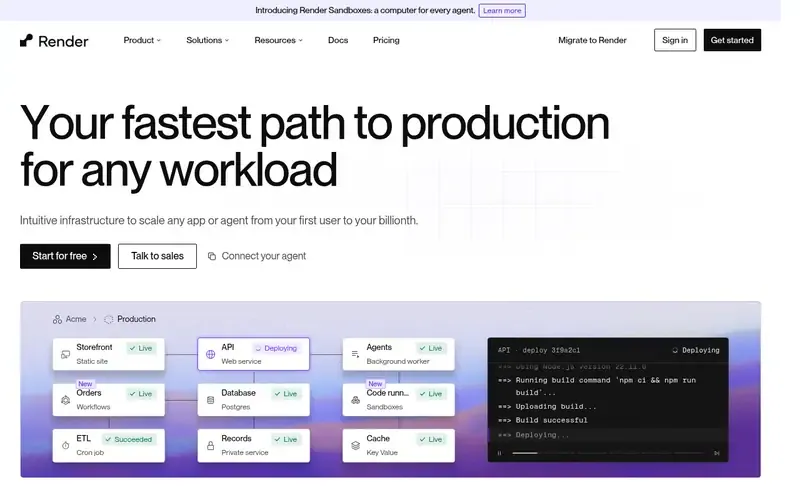
Render is a cloud platform for deploying and scaling apps, agents, databases and workflows with integrated infrastructure primitives.
Documented strengths
- Framework detection from a connected repo
- Ephemeral full-stack preview for every pull request
- Redis-compatible Key Value store for caches and job queues
- Durable workflows for async and agent workloads
- Architecture defined in a single YAML file
Documented limits
The facts we used do not itemize cron jobs or a specific managed database product. Teams that need those should check the vendor documentation.
- Who it is for
- Teams that want apps, queues and async workflows on one platform
- Platforms
- Not stated on official pages
- Pricing
- See the vendor's own pricing page for current plans and costs. render.com
- Facts checked
- 21 November 2026
Why it is placed here: It sits first because its documentation pairs a Redis-compatible Key Value store for job queues with durable workflows for async work, alongside app deployment from a connected repo.
#2 · Railway
Railway
Small teams that want services, databases, workers and cron in one view
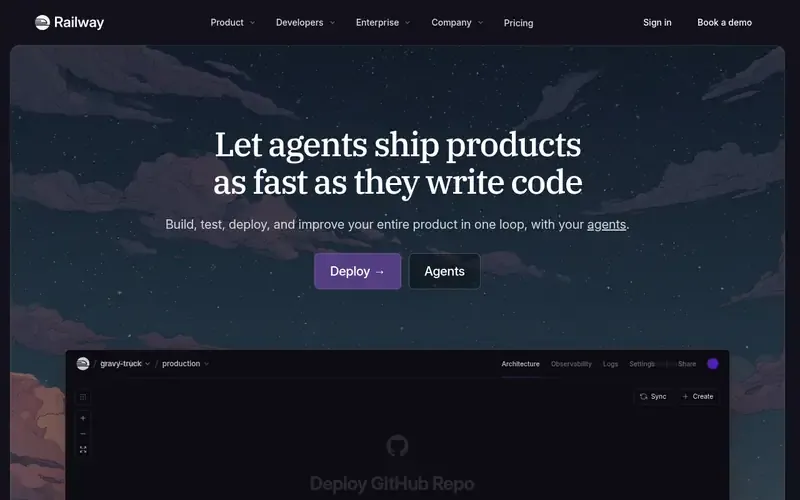
Railway is a full-stack cloud for deploying web apps, servers, databases and more with automatic scaling, monitoring and security.
Documented strengths
- Services, databases, workers and cron jobs on one visual canvas
- Databases with built-in backups
- Cron jobs configured to run on a schedule
- Isolated environments per PR or agent task, cloned from production
- Deployments reverted in one click
Documented limits
Documented as a general full-stack cloud. Teams with specific database engines or compliance requirements should check the vendor documentation. Enterprise features such as single sign-on are listed separately.
- Who it is for
- Small teams that want services, databases, workers and cron in one view
- Platforms
- Vendor cloud, or within a customer's existing cloud environment
- Pricing
- See the vendor's own pricing page for current plans and costs. railway.com
- Facts checked
- 21 November 2026
Why it is placed here: It sits second because its documentation shows services, databases, workers and cron jobs together on one visual canvas, which matches this use case closely.
#3 · Salesforce
Heroku
Teams that want a fully managed PaaS with Postgres and add-ons
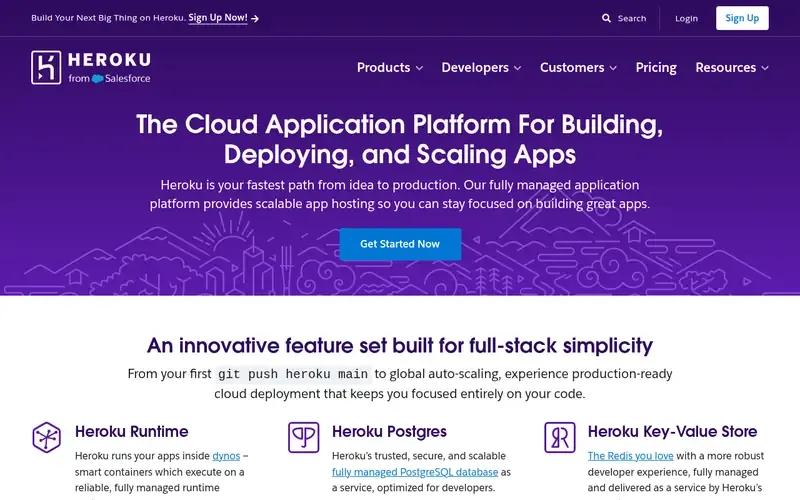
Heroku is a container-based cloud Platform as a Service (PaaS) that developers use to deploy, manage and scale apps.
Documented strengths
- Apps run in dynos on a managed runtime
- Deploys from Git, GitHub or CI systems
- Review Apps for every pull request
- Instant rollback of code or Postgres data
- Three fully managed data service add-ons
Documented limits
The facts we used do not describe background workers or cron jobs, so teams that need them should check the vendor documentation. Heroku is a business unit of Salesforce.
- Who it is for
- Teams that want a fully managed PaaS with Postgres and add-ons
- Platforms
- Container-based managed runtime (dynos)
- Pricing
- See the vendor's own pricing page for current plans and costs. heroku.com
- Facts checked
- 21 November 2026
Why it is placed here: It sits third because it documents fully managed Postgres and data service add-ons with mature delivery tooling, while workers and scheduled jobs are not itemized in the facts we used.
#4 · Fly.io
Fly.io
Teams that want regional VMs with managed Postgres and storage
Fly.io is a developer-focused public cloud for deploying apps, agents and databases on hardware-isolated VMs.
Documented strengths
- Each computer is its own Firecracker microVM
- Managed Postgres with backups, failover and connection pooling
- Redis for caching and queues, powered by Upstash
- Tigris S3-compatible object storage
- APIs run on VMs across 18 regions
Documented limits
Worker and cron patterns are not itemized in the facts we used, so teams should check the vendor documentation. The vendor positions it as developer-focused.
- Who it is for
- Teams that want regional VMs with managed Postgres and storage
- Platforms
- Hardware-isolated VMs across 18 regions
- Pricing
- See the vendor's own pricing page for current plans and costs. fly.io
- Facts checked
- 21 November 2026
Why it is placed here: It sits fourth because it documents managed Postgres, Redis, object storage and volumes, but the facts we used do not describe workers or cron jobs.
#5 · DigitalOcean
DigitalOcean App Platform
Teams deploying web apps and APIs from Git or containers
DigitalOcean App Platform is a fully managed Platform-as-a-Service for building, deploying and scaling web applications, APIs and static sites.
Documented strengths
- Deploys from Git hosting providers or container registries
- Built-in CI/CD with staging, production and preview environments
- Each service deployed as its own component within one app
- Functions as app components for serverless APIs
- Deployments tracked and rolled back
Documented limits
Documented for web apps, APIs and static sites. Teams that need managed databases, background workers or cron should check the vendor documentation.
- Who it is for
- Teams deploying web apps and APIs from Git or containers
- Platforms
- Fully managed PaaS
- Pricing
- See the vendor's own pricing page for current plans and costs. digitalocean.com
- Facts checked
- 21 November 2026
Why it is placed here: It sits fifth because it documents web apps, APIs, functions and per-service components with built-in CI/CD, while databases, workers and cron are not itemized in the facts we used.
#6 · Amazon Web Services
AWS Elastic Beanstalk
Teams already on AWS that want managed web app deployment
AWS Elastic Beanstalk is an application management service that deploys and manages web applications, handling provisioning, scaling, patching and health monitoring.
Documented strengths
- Deploys source code, a Dockerfile or a container image
- Dedicated EC2 environments or shared infrastructure on Amazon EKS
- Standard Mode integrates with Amazon RDS for database provisioning
- Networking, load balancing and auto scaling configured automatically
- Dedicated environment per tenant for multi-tenant SaaS
Documented limits
Documented for web applications, and the facts we used do not describe background workers or cron jobs. Teams that need them should check the vendor documentation.
- Who it is for
- Teams already on AWS that want managed web app deployment
- Platforms
- AWS: EC2 environments or Amazon EKS
- Pricing
- See the vendor's own pricing page for current plans and costs. aws.amazon.com
- Facts checked
- 21 November 2026
Why it is placed here: It sits last because it is documented for web application deployment with Amazon RDS integration, and its infrastructure options suit teams already working in AWS more than small teams seeking an all-in-one backend platform.
Sources
- Render: render.com, render.com/about, render.com/security (21 Nov 2026)
- Railway: railway.com, railway.com/about, railway.com/features (21 Nov 2026)
- Heroku: heroku.com, heroku.com/about, heroku.com/platform (21 Nov 2026)
- Fly.io: fly.io, fly.io/about, fly.io/security (21 Nov 2026)
- DigitalOcean App Platform: digitalocean.com/products/app-platform, digitalocean.com/about (21 Nov 2026)
- AWS Elastic Beanstalk: aws.amazon.com/elasticbeanstalk, aws.amazon.com/products, aws.amazon.com/solutions/ai (21 Nov 2026)
Related guides
How we compiled this
We looked at how completely each platform documents the backend building blocks this use case needs: managed databases, workers or async workloads, and cron or scheduled jobs. We also considered documented deployment workflows, such as Git-based deploys and preview environments, and the platform and security details each vendor states.
All facts come from official vendor pages, recorded with check dates. The order reflects editorial fit for this use case, and we explain it in words under each entry. It does not say one platform is better overall. The list is built from vendor documentation, not from product trials, so teams should confirm details in the vendor documentation before committing.
Order used: Ordered by completeness of backend building blocks (databases, workers, cron) on a single platform.
Common questions
Which platforms put databases, workers and cron jobs in one place?
Railway documents services, databases, workers and cron jobs on one visual canvas. Render documents a Redis-compatible Key Value store and durable workflows, and Fly.io documents managed Postgres, Redis and object storage.
Do these platforms offer preview environments for pull requests?
Render documents ephemeral full-stack previews for every pull request, and Heroku documents Review Apps. Railway documents isolated environments per PR, and DigitalOcean App Platform supports preview environments.
Which platform has managed Postgres with backups?
Fly.io documents managed Postgres with backups, failover and connection pooling. Heroku documents Postgres with instant rollback of data, and Railway documents databases with built-in backups.
Can I deploy a Docker container on these platforms?
Railway can deploy any container image as a service, and DigitalOcean App Platform lets users bring a Dockerfile or container image. AWS Elastic Beanstalk accepts a Dockerfile or container image, and Fly.io generates Dockerfiles for popular frameworks.
Which platforms state compliance certifications?
Render states it meets SOC 2 Type 2, HIPAA, ISO 27001 and GDPR requirements. Fly.io lists SOC 2 Type II and HIPAA with a pre-signed BAA, and Heroku maintains PCI, HIPAA, ISO and SOC compliance.
The editorial order is unpaid. A vendor can buy one labelled featured slot per guide, but it gets the same fact check as everyone else and cannot alter or remove a competitor's entry. Guidehurst is independent. Product names and logos belong to their respective owners.